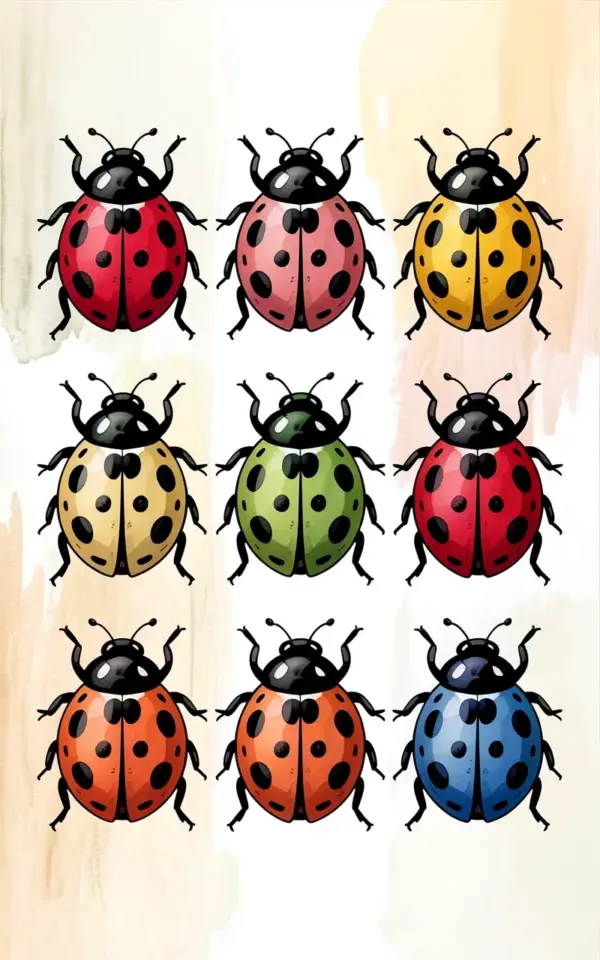
Nine watercolor ladybugs, arranged in a neat 3×3 grid on a cream background, is the kind of illustration that stops your scroll. It’s not just a collection of cute beetles, it’s a full color study that feels both scientific and whimsical, like a page torn from a very happy naturalist’s journal. The watercolor ladybugs in this piece are painted with such care, each one getting its own personality from the shade of red, coral, yellow, or even blue that fills its wings.
I found this watercolor ladybugs illustration and had to share it, because it’s the perfect example of how a simple subject can become a piece of art. The hand-painted spots and those tiny black legs drawn in thin, confident lines make the whole thing feel alive. You get this immediate sense of the artist’s hand moving across the paper, building each bug up from a wash of color to a finished little character.
Why This Palette Works So Well for Insect Art
The choice of colors here is what makes the grid sing. Most ladybug art sticks to the classic scarlet, which is lovely, but this artist decided to play with the entire warm spectrum. You have the bright red, a softer coral, then a sunny yellow that almost looks like a tiny citrus fruit with legs.
Honestly, the blue one at the bottom row is the one that gets me. It’s unexpected, almost surreal, and yet the painting technique is so consistent that it doesn’t feel out of place. It just makes you wonder what other colors you could try, maybe a deep purple or a soft lavender for a night-themed bug. The pale yellow and green in the middle row add to the botanical, leaf-like feel, tying the whole grid back to nature in a way that feels fresh.
The Charm of the Spotted Back and Fine Legs
Look at the details on these little critters. The spots on each ladybug are not perfectly uniform; they’re painted with a wet-on-dry technique that leaves tiny, natural bleeding edges. That imperfection is the whole secret to watercolor art, it gives the piece a looseness that a digital print just can’t replicate.
The six legs on each bug are drawn in that thin, black line work, and they are so expressive. You get a sense of a little creature that is just about to take off, or settle down on a leaf. The black rounded head and the antennae add the right amount of cartoonish charm without making the beetles look like cheesy clip art. They feel like real, living insects that are just too cute to be scary.
How to Showcase a Grid of Cute Beetle Paintings
If you are lucky enough to snag a print of this, you have a few options for displaying it. A simple white or oak frame with a mat can make the cream background pop and keep the focus on the nine individual scenes. It’s a great piece for a gallery wall, especially if you are mixing in other botanical art.
Here is a quick list of ideas for getting the most out of insect art like this:
– Try grouping it with other nature prints, like mushrooms or wildflowers.
– Let it stand alone on a small shelf riser, no frame needed, just leaning against the wall.
– Print it on a throw pillow for a cute, quirky touch to a reading nook.
The size of the grid means it works as a statement piece, but the color palette keeps it from being too loud. It’s one of those rare animal paintings that can work in a kid’s room, a craft room, or even a bright, airy kitchen.
The Artistic Merits of Watercolor Over Other Media
Watercolor sits in this interesting middle ground between painting and drawing. It allows for a translucency that you just don’t get with gouache or acrylics. The white of the paper shows through the wings of the ladybug, which makes the reds and yellows look almost luminous.
I appreciate the slight pigment pooling around the edges of the dark spots; it shows a human hand at work. If you zoom in, you can almost see where the artist lifted some of the paint with a dry brush to create a highlight on a rounded back. It’s a technical skill that takes years to develop, and when you see it done well on something as small as a ladybug, you have to stop and appreciate the effort.
Using This Ladybug Illustration for Seasonal Decor
This sort of insect art has a natural seasonal pull, especially for summer and early fall. The warm corals and reds feel right for a hot July afternoon, while the yellow and orange shades echo the changing leaves of September. It’s not Christmas-y at all, but it brings a warm energy that you want in a cozy room.
However, I also think it works great as a year-round pick-me-up. Seeing that little blue ladybug on a gray, rainy February day is a nice reminder that summer is coming back around. It’s a small, painterly dose of optimism that you can hang on your wall.
A Fresh Take on Classic Ladybug Art
We’ve all seen the badly drawn ladybug art, the kind that looks like a plastic toy glued to a canvas. This is the opposite of that. It feels like a modern take on an old botanical study, one that has been loosened up and made friendlier for a contemporary audience. The artist clearly has a deep affinity for the subject, but they didn’t sacrifice composition for cuteness.
It is a careful balance between scientific accuracy and pure charm. The grid format makes it feel organized and intentional, while the colors are wild and free. It’s art that makes you smile, not just because it’s a cute bug, but because you can see the pure joy in the brushstrokes.
Incorporating Watercolor Elements Into Your Own Work
If you are a painter yourself, this illustration is a fantastic reference for a quick study. You don’t need to copy it exactly, just take the idea and run with it. Try picking three colors you never use together and see what kind of insects you can create.
The little guy with the coral body and black spots is the perfect example of simple composition. Focus on the shadows under the oval body, just a tiny hint of darker pigment mixed with a touch of blue to ground the bug on the page. And don’t forget the legs, they really anchor the creature. It’s a fun project that doesn’t require a huge time commitment, and it would help you master the balance between wet washes and dry line work.
At the end of the day, this watercolor ladybugs piece is just pure joy on paper. It’s a simple idea executed with skill and personality, and it leaves you feeling a little more connected to the small, beautiful things in the world. If you are looking for insect art that feels warm, lived-in, and a little bit playful, you could not ask for a better find. Keep an eye out for prints of this one, it sells out fast in my experience.
Leave a Comment