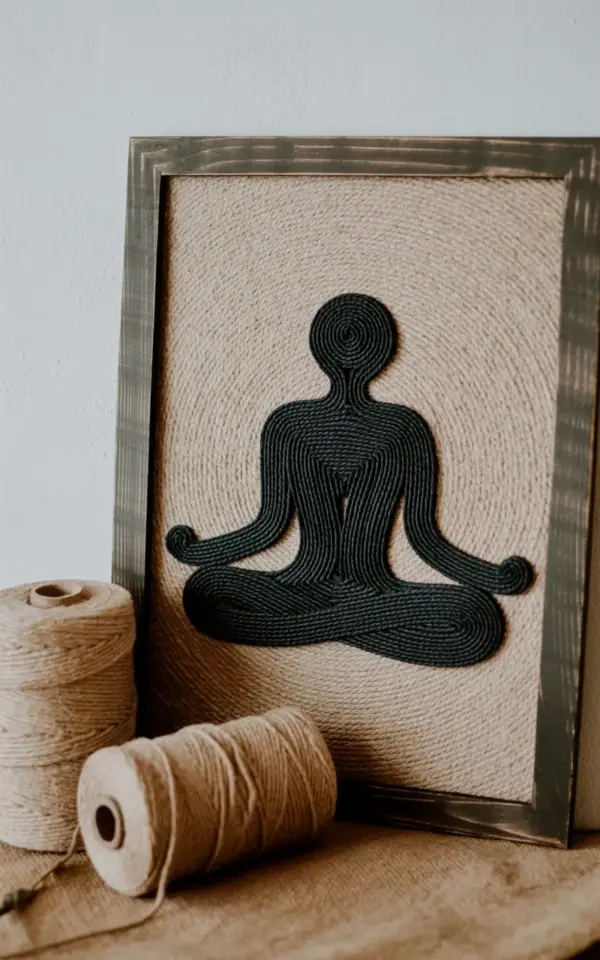
There’s a zen rope art piece that caught me off guard in a friend’s sunlit living room. It’s a handmade spiral meditation figure, black rope coiled into a seated lotus pose on a textured beige background, all wrapped in a dark wooden frame. The photo doesn’t fully capture how the rope’s curves catch the light, but the two spools of natural jute twine and the burlap cloth lying beneath tell the real story. This is rustic wall art with a quiet, deliberate presence.
Why a Spiral Lotus Pose Works So Well as Meditation Decor
The spiral isn’t just a pretty pattern. In many traditions, a spiral represents the inward journey, the path you take when you sit down to breathe. Here, the black rope forms a flowing, continuous line that ends in a clear meditating figure, crossed legs and all.
That visual is exactly what meditationdecor needs: something that reminds you to slow down without shouting for attention. The dark wood frame anchors the piece, so your eye lands on the rope’s curves first, then the beige background, then the frame itself. It feels balanced, not busy.
When I look at this particular figure, I notice how the curves suggest motion even though the pose is still. The rope never breaks, which mirrors the idea of staying present through the breath. That’s a rare quality in wall art.
Jute Twine and Burlap: The Heart of Earthy Home Decor
The foreground of the photo includes two spools of natural jute twine sitting on a burlap surface. That small detail makes the whole image feel more honest. You can almost smell the jute and feel the coarse weave under your fingers.
Earthy home decor thrives on texture, and jute twine is one of the easiest ways to add it. Use leftover spools as tabletop accents, wrap them around plain vases, or simply leave them near the art as a styling prop. The burlap underneath does double duty: it protects the surface and adds a warm, natural base that echoes the beige in the framed piece.
If you love this rustic look, save it for later. The combination of black rope, jute twine, and burlap is simple to replicate in other areas of your home, like a shelf vignette or a tray on the coffee table.
How to Style Rustic Wall Art Against a Light Gray Wall
The background wall in the photo is a soft, light gray. That’s not an accident. Gray provides enough contrast to make the dark frame and beige texture pop, but it stays neutral enough to keep the room calm.
Rustic wall art like this works best when it has room to breathe. Don’t cram it between busy frames or bright posters. Give it a clear stretch of wall, maybe above a low dresser or next to a floor plant.
For a cohesive look, pick one other texture in the room that matches the burlap or jute. A woven blanket, a rattan basket, or a linen cushion will all tie back to the artwork without competing for attention. The light gray wall then acts as a quiet backdrop, not a loud statement.
Five Ways to Feature a Spiral Meditation Figure in Your Space
This kind of art can live in more places than you might think. I’ve seen it work in entryways, bedrooms, and even small office corners. Here are five curated ideas, each with its own distinct theme.
- The yoga nook: hang it at eye level so you can focus on it during seated stretches.
- The reading corner: pair it with a floor lamp and a stack of natural fiber books.
- The entryway: place it near a wooden bench and a tray for keys.
- The office shelf: lean it against the wall instead of hanging it, next to a jute spool.
- The guest bedroom: add it above a simple headboard for a restful welcome.
Each of these setups changes the feel of the piece. In the yoga nook, it becomes a focal point for meditation. In the office, it’s a reminder to pause between tasks. The same rustic wall art adapts to the room’s purpose.
Try moving yours around every few months. Handmade pieces like this one often look different when the light shifts or when they sit beside new objects.
What to Look for in Handmade Spiral Figures
Not all spiral rope art is created equal. When you’re shopping, check the back of the frame first. A solid backing and a secure hanging wire mean the piece will stay straight and safe for years.
Look at the rope’s thickness and color. A consistent, even line in the spiral suggests careful work. The black rope in this photo stands out clearly against the beige, which is exactly what you want: strong contrast without harshness.
Also inspect the frame’s corners. Dark wood frames should meet neatly, with no gaps. And check the background texture in person if you can. A real woven or textured surface adds depth in a way that printed art simply can’t match.
Try Your Own Version with Black Rope and a Thrifted Frame
If you’re handy, you can make a similar piece at home. Find a flat board, cover it with a beige textured fabric like linen or burlap, and spray a light adhesive. Then draw the spiral lightly in pencil, and glue black rope along the line using a hot glue gun.
Start at the outer edge of the spiral and work your way in, letting the rope end at the center where the head of the figure sits. Add small bent sections for the crossed legs. Mount it in a dark wooden frame, and you have your own meditationdecor.
A simpler version uses jute twine instead of black rope. The color will be warmer and less dramatic, but still very earthy. Use the two spools from the photo as your inspiration, and don’t stress about perfection. The handmade wobbles are part of the charm.
When you look at this zen rope art, you’re seeing more than just a decorative object. You’re seeing a small invitation to pause, breathe, and turn inward. That’s a lovely thing to have on your wall, especially in a corner where you already go to reset.
If this style speaks to you, pin it for later or show us how you’d style it. The best rustic spaces are the ones that feel personal, and a spiral meditation figure is a wonderful place to start.
Leave a Comment